
Kitchen Countertops:
Elevating Functionality and Style
The countertop is one of the most important design elements in any kitchen.
It acts as a useful space for preparing food, cooking, and socializing. It also helps set the kitchen’s overall style.
Choosing the right kitchen countertop involves balancing aesthetics, durability, and practicality. In this guide, we will look at different countertop materials and design ideas. We will also help you choose the best countertop for your kitchen.
Workspaces That Define Your Kitchen
The Purpose of Kitchen Countertops
Kitchen countertops are not only essential for food preparation but also serve as the centerpiece of your kitchen design. When you chop vegetables, mix ingredients, or entertain guests, the countertop gets a lot of use. It should be both useful and stylish.
With the right countertop, you can balance practicality and beauty. This will transform your kitchen into a space that fits your lifestyle.
Common uses for kitchen countertops include:
Food Preparation
A durable, easy-to-clean surface is critical for prepping meals and handling hot pots or pans.
Casual Dining
Many countertops double as breakfast bars or casual dining areas for families.
Storage and Display
Countertops provide space to keep frequently used items like coffee makers, cutting boards, and decorative pieces.
Kitchen Countertop
Key Kitchen Countertop Design Matters
Combining Functionality and Visual Appeal
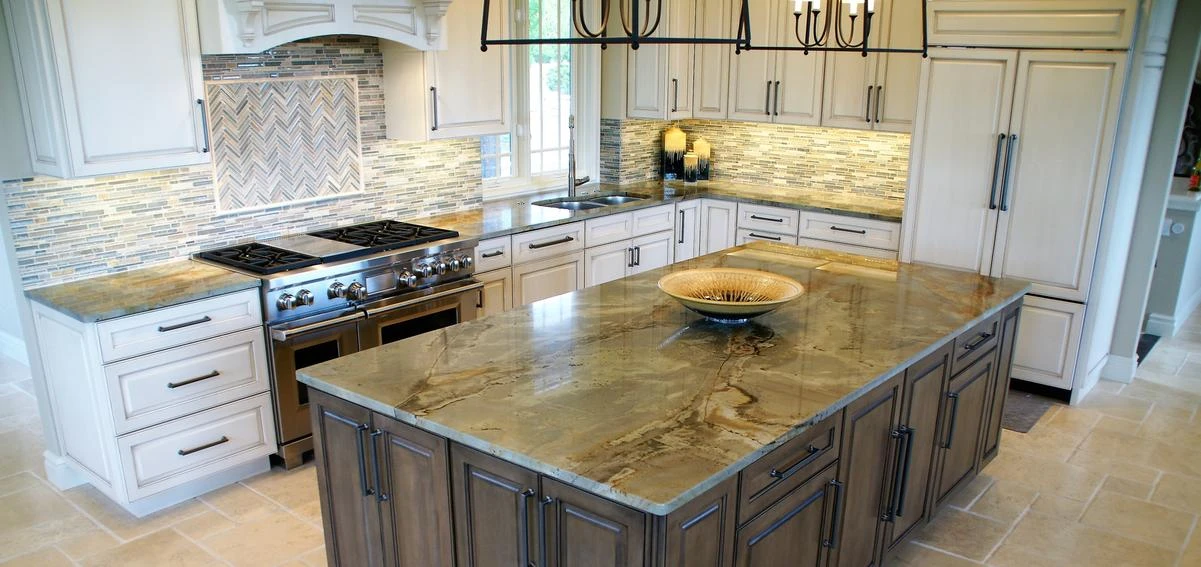
Choosing the right countertop is about more than just appearance. You need a surface that can stand up to daily use, resist stains and scratches, and complement the rest of your kitchen design. The right countertop can improve how your kitchen works and looks. It helps you create a space that is both useful and attractive.
Key benefits of thoughtful kitchen countertop design:
Durability
The right material will stand up to heat, spills, and daily wear and tear while retaining its beauty.
Aesthetic Consistency
Countertops are important in the kitchen’s design. They connect the cabinets, backsplashes, and flooring.
Ease of Maintenance
Choosing a material that is easy to clean and maintain helps keep your kitchen looking fresh and well-kept.
Customization
Different materials and finishes are used to make countertops.. This lets you customize them to match your cooking habits and personal style.
Kitchen Countertop
Types of Kitchen Countertop Materials
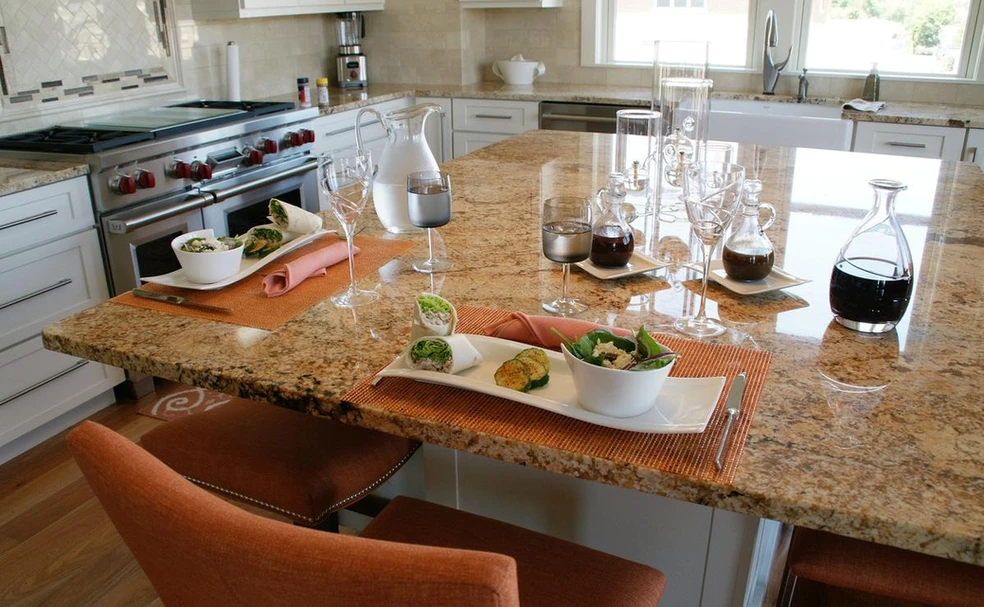
The material you choose for your kitchen countertop will influence its durability, maintenance requirements, and overall look. Below are some of the most popular materials, along with their benefits and considerations.
Granite
Granite is one of the most popular countertop materials due to its natural beauty and durability. Each granite slab is unique, with different colors and patterns that make it stand out in any kitchen. It’s heat and scratch-resistant, making it ideal for busy kitchens.
Pros: Highly durable, heat-resistant, available in many colors and patterns.
Cons: Requires periodic sealing to prevent stains, can be costly.
Quartz
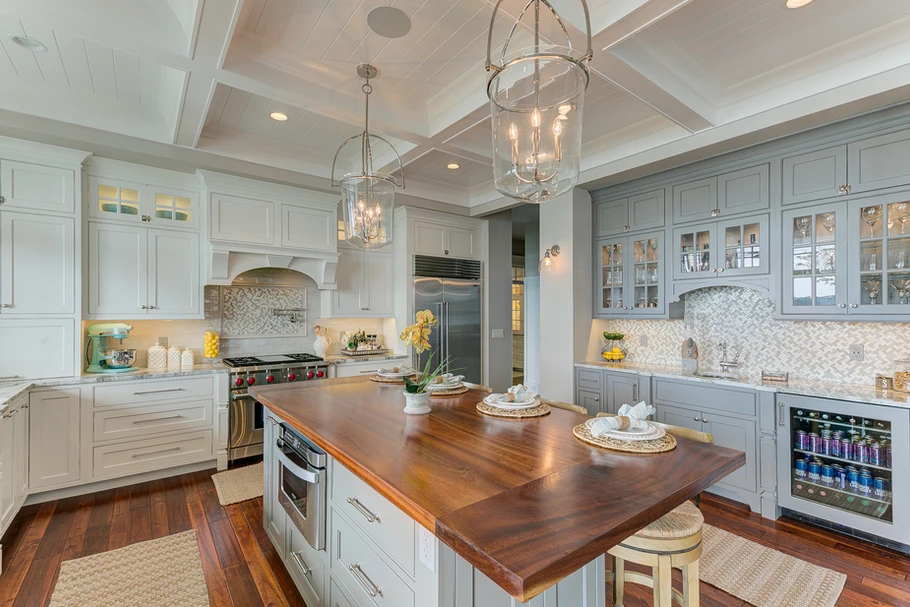
Quartz countertops are engineered stone surfaces made from natural quartz crystals combined with resin. These countertops are non-porous, making them highly resistant to stains and bacteria, which is ideal for food preparation.
Pros: Low maintenance, non-porous, wide variety of colors and designs.
Cons: Not as heat-resistant as granite, can be pricey.
Marble
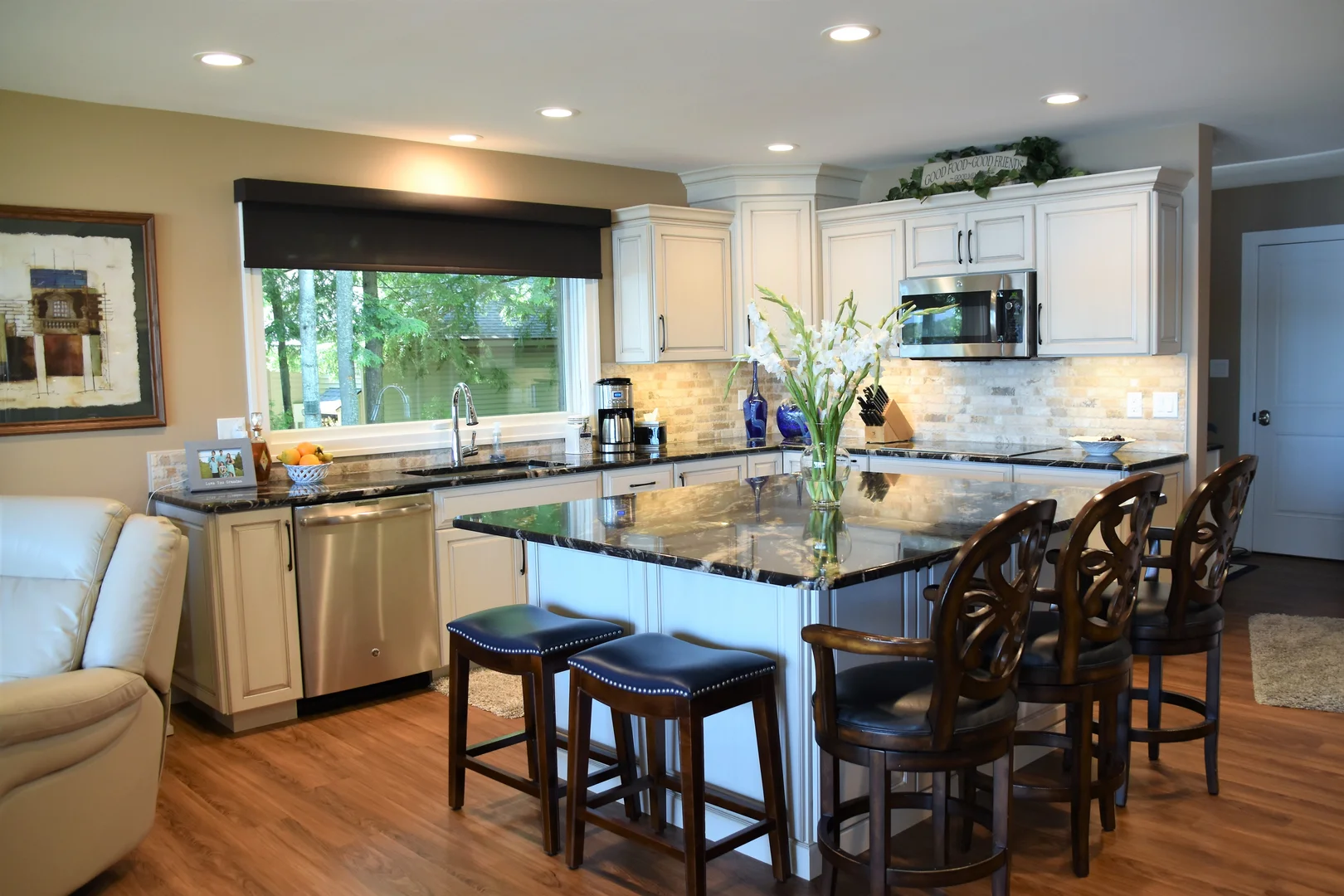
Marble countertops offer a classic, elegant look with their unique veining and luxurious appearance. However, marble is softer and more porous than granite or quartz, making it more prone to stains and scratches.
Pros: Stunning and elegant appearance, natural veining creates a unique look.
Cons: Susceptible to staining and scratching, requires regular maintenance.
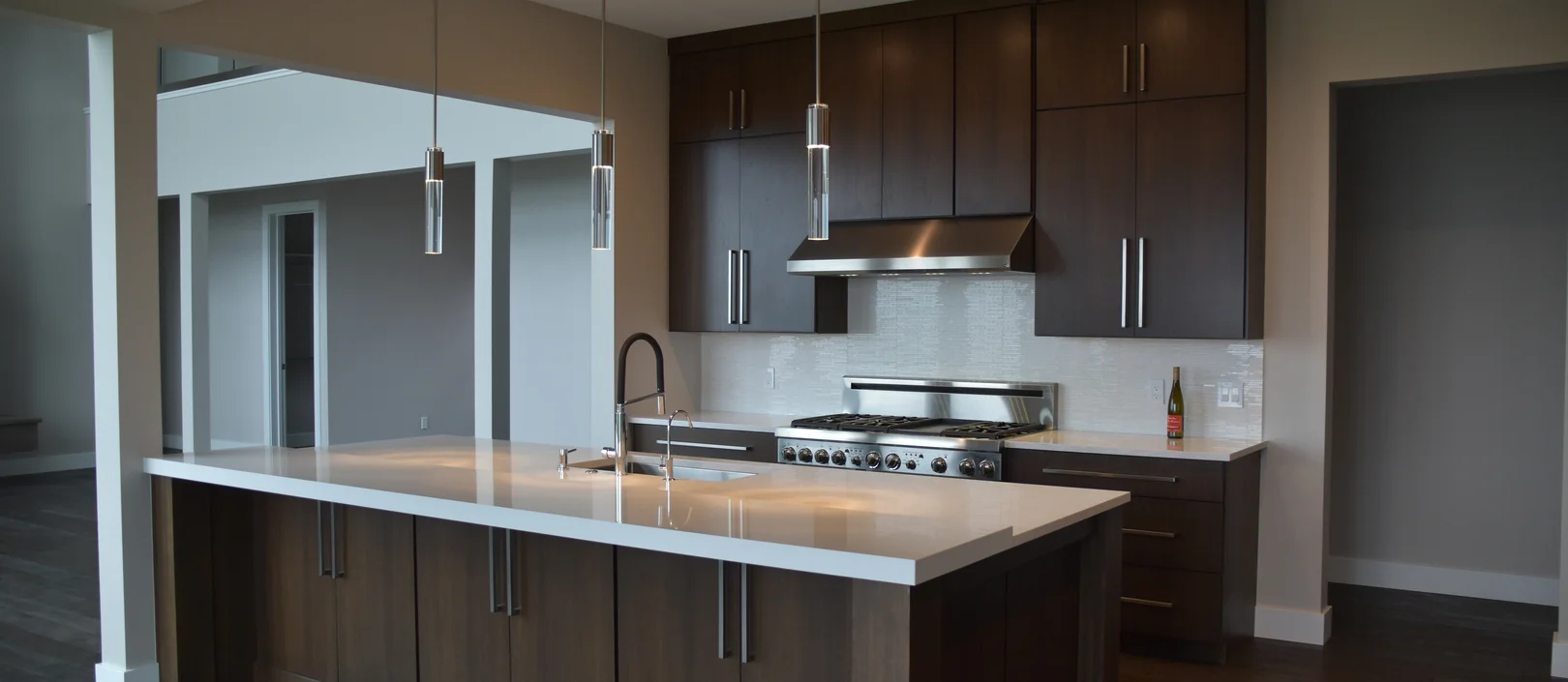
Butcher Block
Butcher block countertops are made from strips of hardwood and bring a warm, organic feel to the kitchen. They are ideal for food preparation but do require more upkeep than stone surfaces, including periodic oiling.
Pros: Great for food prep, it adds warmth and natural beauty. You can also sand and refinish it.
Cons: Prone to scratches, requires regular oiling, sensitive to water damage.
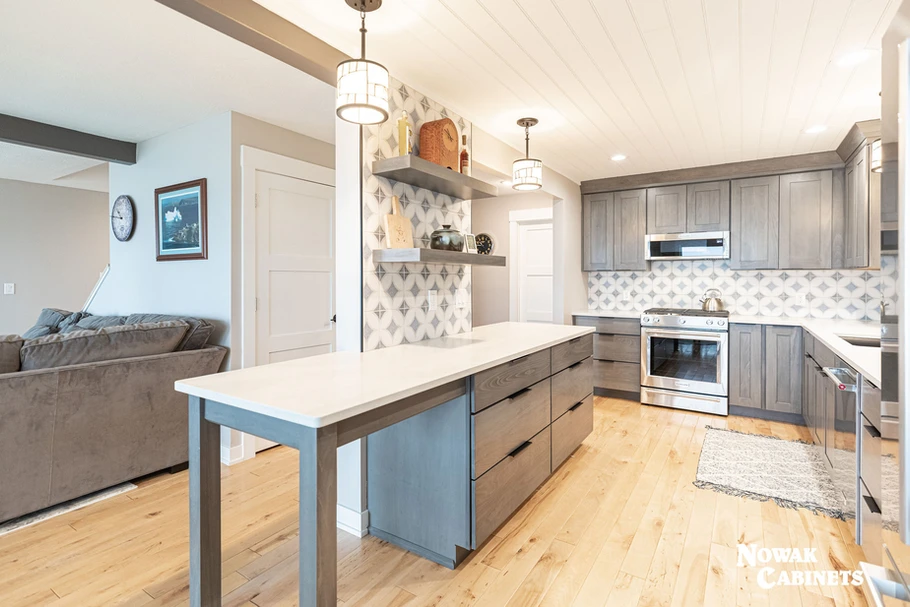
Concrete
Concrete countertops provide an industrial, modern aesthetic and can be customized with various colors, textures, and finishes. Although they offer high durability, you must seal them properly to avoid staining.
Pros: Highly customizable, durable, and unique in appearance.
Cons: Requires sealing, prone to cracking if not installed properly.
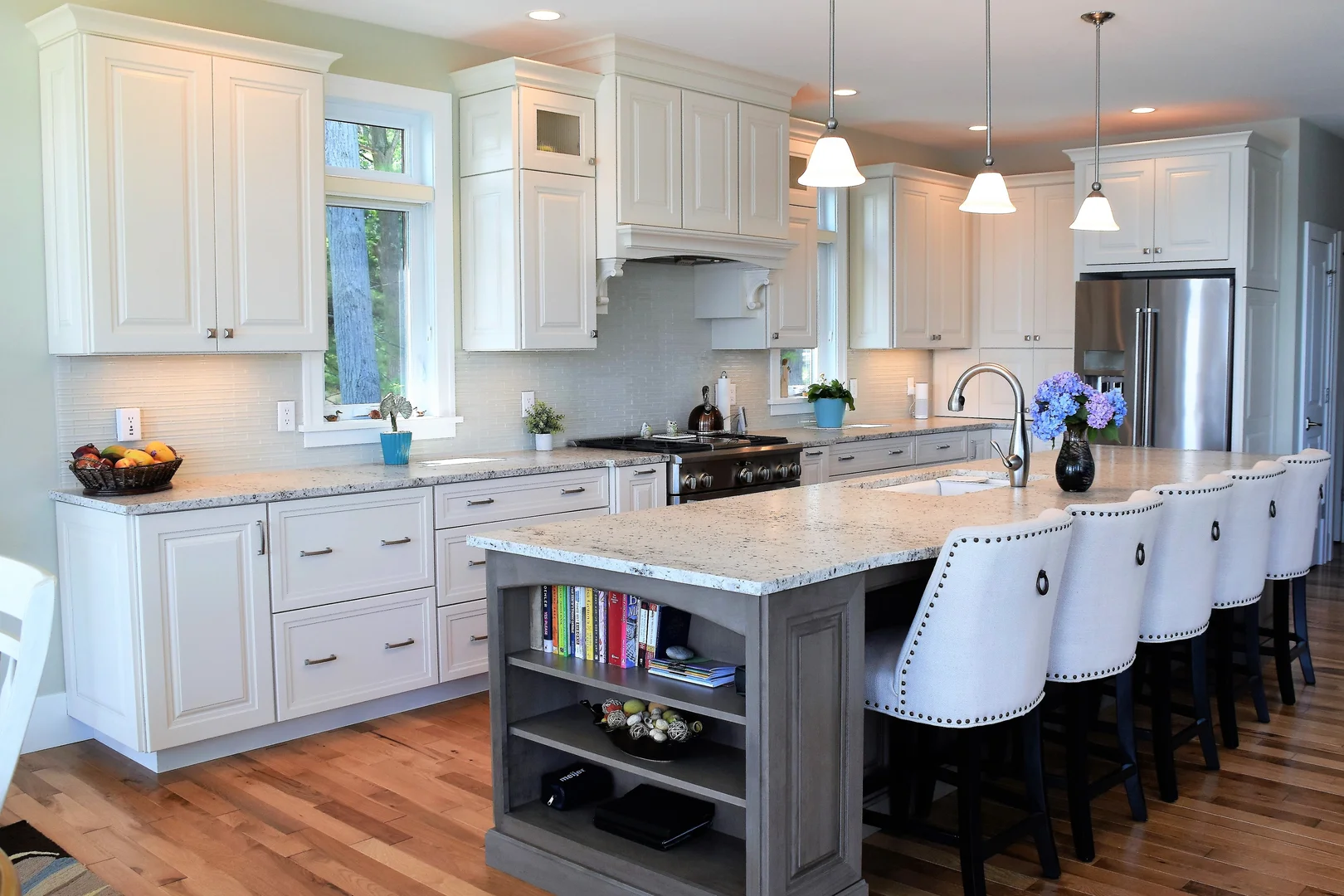
Laminate
Laminate countertops are a budget-friendly choice. They come in many colors and patterns. Some even look like natural stone. Though not as durable as other materials, laminate is easy to clean and maintain.
Pros: Budget-friendly, available in many colors and patterns, low maintenance.
Cons: Not as durable as stone, can be prone to chipping or scratching.
Stainless Steel
Stainless steel countertops are popular in commercial kitchens due to their durability, resistance to heat, and hygienic properties. They are perfect for modern or industrial-style kitchens.
Pros: Heat-resistant, non-porous, durable, and easy to clean.
Cons: Can dent or scratch, shows fingerprints and water spots.
Kitchen Countertop
Design Ideas for Kitchen Countertops
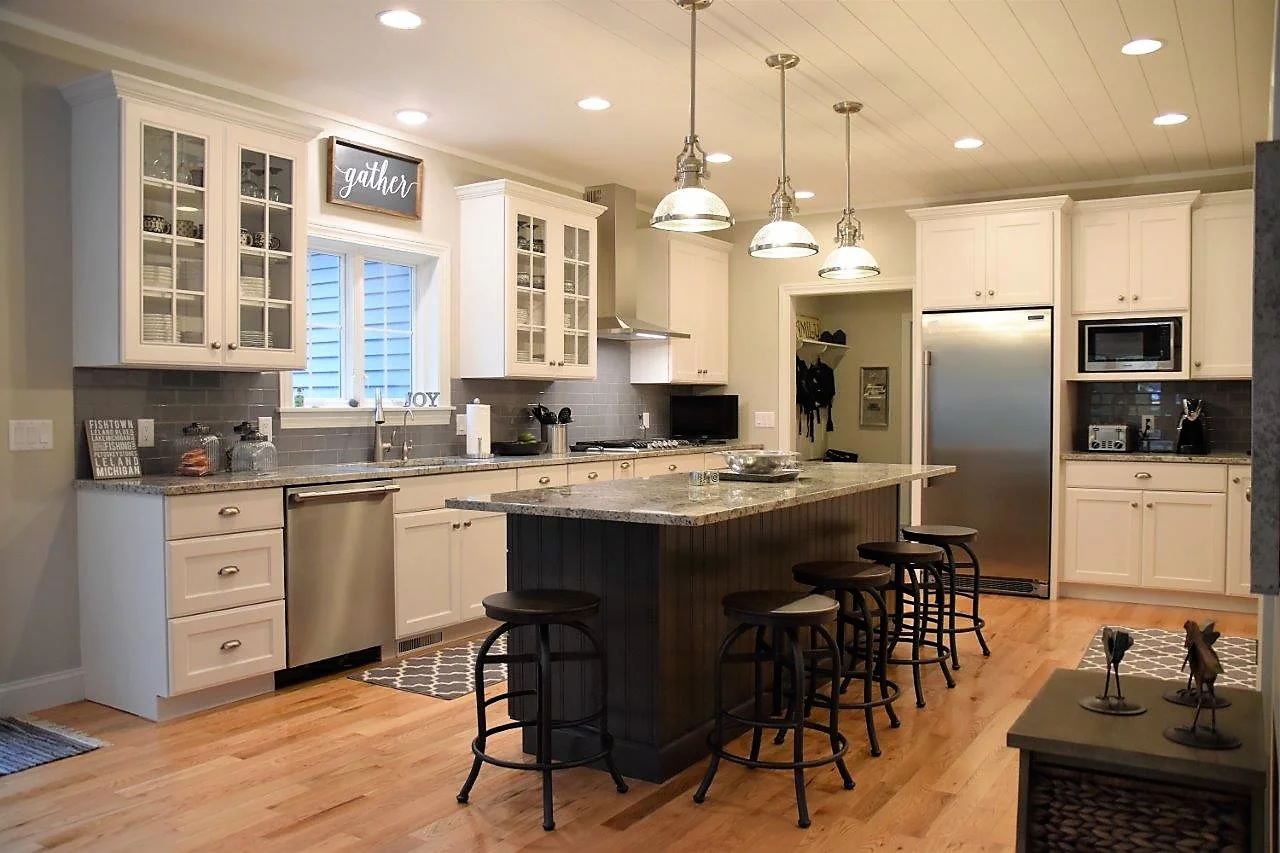
Waterfall Countertops
A waterfall countertop design has the material flowing down the sides of the island or cabinets. This creates a smooth and elegant appearance. Designers often use this design with quartz, granite, or marble to create a modern, sophisticated aesthetic.
Multi-Level Countertops
For kitchens that need both prep space and casual dining, multi-level countertops provide an innovative solution. One part of the countertop is raised or lowered to make a special eating area. The main surface stays at a standard height for food preparation.
Contrasting Countertops
Using different countertop materials in one kitchen can create visual interest and define specific areas for different functions. For example, you might use butcher block on the kitchen island for food prep while opting for quartz or granite on the perimeter countertops.
Integrated Sinks and Drains
Manufacturers make sinks and drainboards from the same material as the countertop. This design creates a smooth look and removes seams where dirt can build up. This is particularly popular with materials like stainless steel, concrete, or quartz.
Extended Countertop Overhangs
In kitchens with islands, a longer countertop overhang can provide extra seating. This means you won’t need a separate table. This is an ideal design for entertaining or family-friendly kitchens where casual dining is common.
Bold Colors and Textures
While natural stone is often used for its neutral tones, don’t shy away from bold colors or textured finishes. For example, matte black quartz or brightly colored laminate can create a dramatic statement in a modern kitchen.
Kitchen Countertop
Countertop Solutions for Kitchen Design
When choosing a countertop, think about the material and how you will use it. Also, consider the design features that will fit your needs.
Heat-Resistant Surfaces
If you often put hot pots or pans on your countertop, use heat-resistant materials like granite or stainless steel. These surfaces can handle high temperatures without damage, making them perfect for avid cooks.
Easy-to-Clean Materials
For families or busy homes, non-porous materials like quartz or stainless steel are great for keeping a clean kitchen. Their smooth surfaces resist stains and bacteria, making cleanup a breeze.
Seamless Backsplashes
Instead of a traditional tile backsplash, consider extending your countertop material up the wall for a seamless look. This design works well with stone or quartz countertops. It creates a nice look that is also easy to clean.
Edge Profiles
The edge profile of your countertop can add a subtle design touch to your kitchen. Options range from simple square edges to more ornate beveled or bullnose edges. Each profile provides a different look and you can customize it to match the style of your cabinets.
Countertop Thickness
The standard thickness for countertops is usually about 1.25 inches. However, if you want a bolder look, choose a thicker countertop. A 2- or 3-inch thick countertop can add a bold, modern statement to your kitchen design.
Selecting the right kitchen countertop is about finding a balance between function, durability, and style.
There are many materials to choose from for your kitchen. You can pick the classic beauty of granite. You might like the easy care of quartz. Or you may prefer the warm look of butcher block. There is a perfect option for every kitchen.
Get in Touch
Ready to transform your kitchen into a stunning, functional space?
Let these ideas guide you to the ideal countertop solution!